

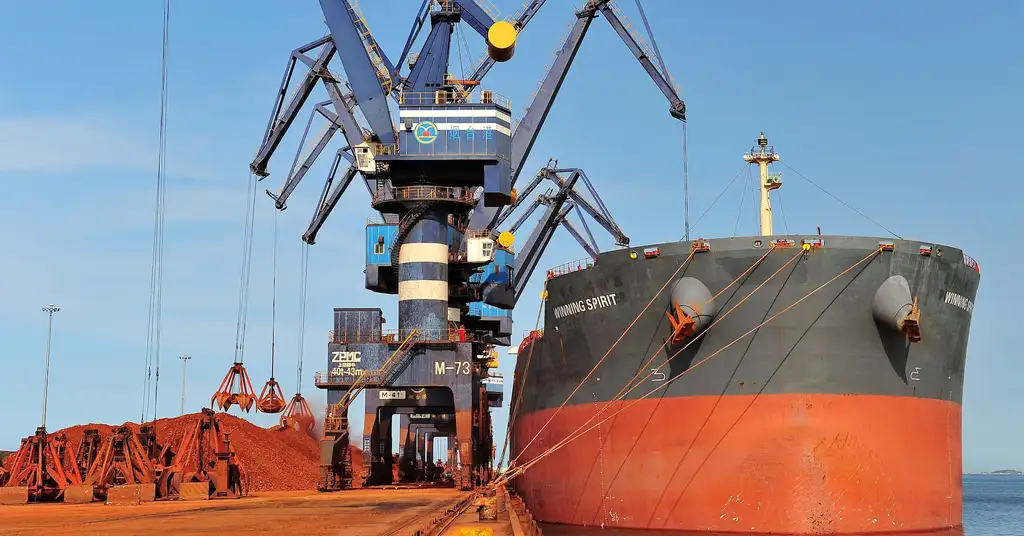
Guinea is strengthening its position in the global bauxite market, becoming the largest supplier of this key resource for aluminum production. It is considering using this advantage to gain greater control over prices and the structure of the industry, in a manner similar to how Indonesia influences nickel, and Congo seeks influence over cobalt.
As highlighted by Reuters
Three major players in the mineral sector are facing the challenges of rapid production growth, squeezing world markets and driving prices down.
Indonesia is applying mining quotas, Congo is imposing export quotas, and Guinea intends to use a blended strategy to curb exports above permitted levels and maintain control over the market’s structure.
For Guinea this is also a chance to boost added value by moving from bauxite mining to processing into alumina, reducing reliance on external suppliers.
Bauxite Wave
Guinea not only holds the world’s largest reserves of metallurgical-grade bauxite, but also produces a product of high quality valued in aluminum production. Thanks to substantial Chinese investments, the country has become a global leader: in 2023 it surpassed Australia in production and now accounts for about 40% of global output and 70% of the world’s seaborne bauxite exports.
Exports in 2025 rose by 25% compared with the previous year, reaching 183 million metric tons, which led to price declines for most of 2025 into early 2026. The government is considering tools to control supply to avoid sharp market swings without dealing a significant blow to supply chains.
Dependence on China
China is increasingly relying on Guinea as a source of bauxite for its large-scale aluminum production. Imports of Guinean bauxite into China rose from 334 thousand tons in 2015 to 149 million tons in 2025, accounting for about 74% of the country’s total bauxite imports. China has its own reserves, but they are depleted, and their quality is lower than Guinea’s. The country is also significantly expanding its aluminum smelting capacity, which heightens the need for processing into alumina and supports rising demand for it.
The planned strengthening of Guinea’s role in the value chain signals a drive to reduce dependence on raw materials by boosting processing and local added value.
Ambitions in Aluminum Production from Oxides
Chalco, one of China’s leading aluminum producers, is moving ahead with building a new aluminum processing plant with a capacity of about 1.2 million tonnes per year, signaling the seriousness of the country’s approach to ensuring stable supplies and diversifying supply chains.
In Guinea, there is an existing processing facility – Friguia, whose history dates back to the 1960s; it has changed owners several times and is currently operating below its licensed capacity of about 650,000 tonnes per year. The government aims to create five or six new plants with a combined capacity of about 7 million tonnes of alumina by 2030. Also, the warning about the real consequences of Emirates Global Aluminium’s asset seizure underscores the region’s vulnerability to state and business risks.
A New West African Industrial Center
Guinea aims to become a regional hub for resource processing, following the example of Indonesia, which captivated the world after banning bauxite exports. The challenge is limited energy resources for a transition from alumina to full aluminum smelting; however, a successful execution of the strategy could accelerate the creation of a regional value-added center and spur the development of other African producers toward industrial processing of ores.
The region is already considering similar projects: Nigeria has announced an investment package to build an aluminum plant, and Ghana is also pursuing development in the sector under the auspices of national bodies to capture added value from bauxite to aluminum.
The shift from pure mining to processing could radically alter the global aluminum supply chain: expectations include a reduction in bauxite volumes on the world market, expanded demand for alumina, and the emergence of competition from Chinese processing plants. Such development could transform West Africa into an important manufacturing hub and alter the competitive dynamics of the global aluminum industry.
In short, Guinea’s development as a processing center and regional industrial platform could lead to significant shifts in the global aluminum supply structure and encourage other African countries to develop value chains from mining to processing.